What is the difference between PMU pigments and regular tattoo ink?
PMU pigments and regular tattoo inks are built for completely different environments. Tattoo inks are formulated for body skin — thicker, less reactive, and designed to stay permanently. PMU pigments are made for facial skin which is thinner, more vascular, and heals differently in every zone — brow skin behaves differently from lip skin, eyelid skin differently from scalp. PMU-specific formulas use finer particle sizes, different carrier solutions, and pigment loads calibrated to implant at the shallow depth facial procedures require. The practical difference shows up in the healed result — a PMU pigment fades gradually and cleanly over 12-24 months, a standard tattoo ink on facial skin tends to spread, shift colour, and heal unpredictably.
How do I choose the right PMU pigment for each procedure?
The procedure dictates the pigment more than anything else. Brow pigments need to implant cleanly into hair stroke incisions or build gradual saturation for powder work — viscosity and particle size matter. Lip pigments need to survive constant moisture, movement, and oil exposure while holding their colour tone through the fade cycle. Eyeliner pigments need fine particles and the right viscosity for thin, mobile lid skin. Camouflage and areola pigments need to match human skin accurately across different lighting conditions. SMP pigments need to hold a crisp follicle dot without spreading on oily scalp tissue. Using a brow pigment on lips or a body ink for SMP produces results that look wrong, fade wrong, and correct badly. The brands in this collection — Perma Blend, World Famous, Biotek, Draiff, Etalon Mix, Eternal, Radiant, and Solid Ink — all produce procedure-specific formulas. Matching the pigment to the procedure is the starting point for every decision.
Which PMU pigment brands are the most trusted by professional artists?
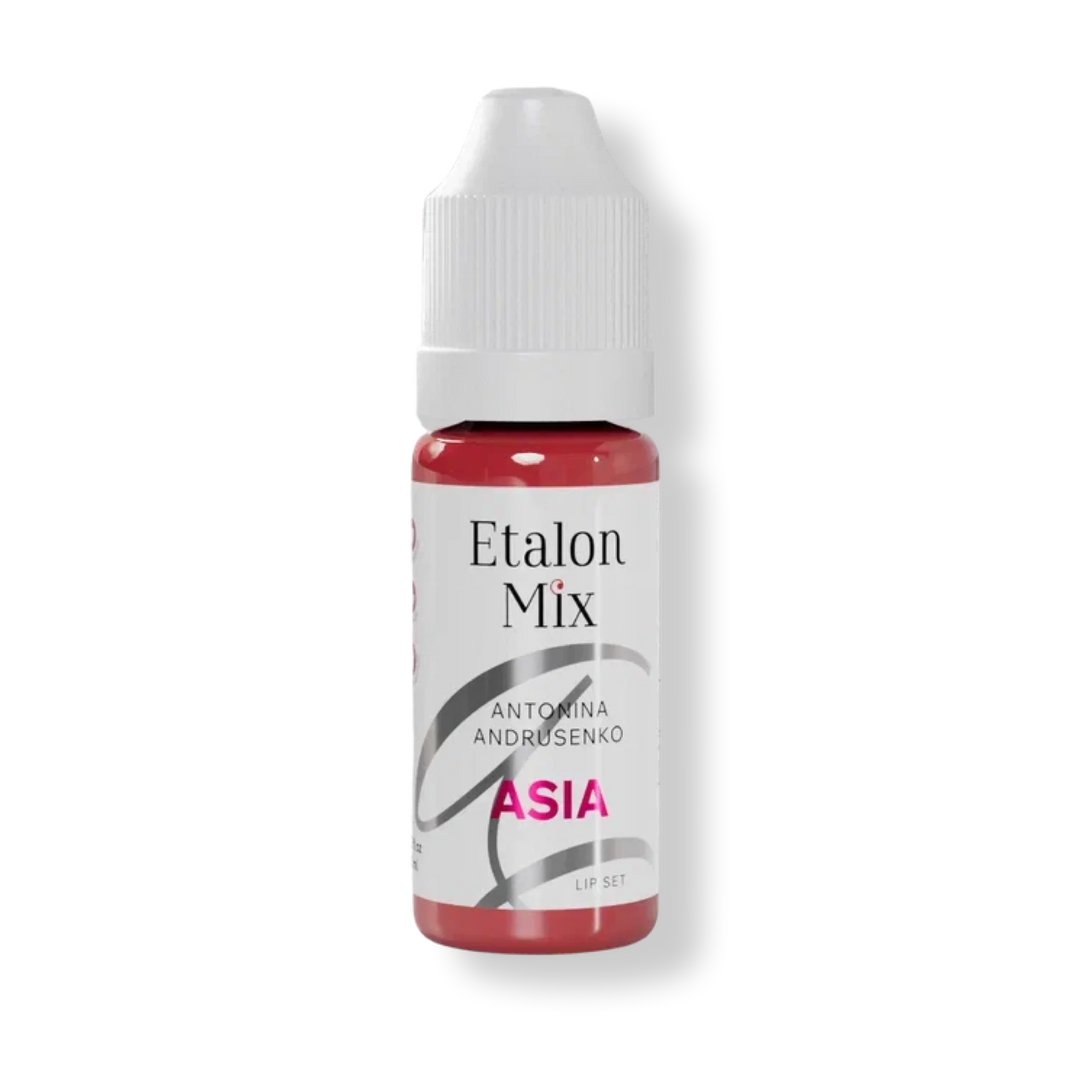
Perma Blend is the most consistently reordered brand across brow, lip, eyeliner, and camouflage work — their procedure-specific formulas heal predictably and fade cleanly, which is why high-volume studios keep them as shelf staples. World Famous has the deepest shade range in the collection — 30+ shades for lips alone — and crosses over well between PMU and decorative tattoo work for studios that do both. Biotek and Etalon Mix are built exclusively for PMU with formulas dialled specifically for facial skin. Draiff covers both pigments and correctors, making it a practical choice for studios that do correction work alongside fresh procedures. Solid Ink rounds out the collection with SMP-specific formulas and skin tone shades for camouflage work.
How long do PMU pigments last before fading?
The fade timeline varies by procedure and skin type more than by brand. Brow PMU typically lasts 12-24 months before a touch-up is needed — oily skin and sun exposure push that number down. Lip blush fades faster, usually 12-18 months, because lip skin is thinner and more exposed to friction and moisture. Eyeliner fades in a similar range to lips, sometimes faster on clients with oily lids. SMP generally lasts 2-4 years before density starts to drop noticeably. PMU-specific pigments from brands like Perma Blend and Biotek are formulated to fade gradually and neutrally — meaning they lighten over time rather than shifting to an unwanted colour. That's the key advantage over standard tattoo inks for facial work.
Can PMU pigments be mixed to create custom shades?
Yes — custom mixing is standard practice for most experienced PMU artists, particularly in brow and lip work where matching a specific client's skin tone or hair colour requires more precision than a single bottle can deliver. Mixing works cleanest within the same brand family — Perma Blend mixes predictably within its own range, as does World Famous. Mixing across brands with different carrier solutions or particle sizes can produce inconsistent results on the heal, so most artists stick to one brand family per procedure per client. For camouflage and areola work, custom mixing isn't optional — it's the only way to achieve an accurate skin tone match across the full range of client complexions.
What should I check before buying PMU pigments for my studio?
Three things matter most: formulation, consistency, and availability. Formulation — is this pigment built specifically for the procedure you're using it for, or is it a general formula being marketed broadly? Procedure-specific pigments from brands like Perma Blend, Biotek, and Etalon Mix produce more predictable results than general-purpose inks used for PMU. Consistency — does the brand reformulate frequently or discontinue shades? Studios doing high-volume work need to know the shade they're building client results around will be available for touch-ups 12-18 months later. Availability — all products in this collection ship from Canada with free shipping on orders over $250, which matters for studios that restock regularly and need reliable delivery timelines.